One engine, forms and calls
Most operators run lead distribution in one vendor and call tracking in another. That means two sets of buyers, filters, caps, and schedules that drift apart. Lead Router treats a call as a lead that rings. One contract engine checks both, using the same filters, caps, and schedule windows to pick the buyer. These three pages cover each area in depth.

Three Surfaces
Pick where your traffic comes from
Every page below describes the same routing engine from a different entry point: a submitted form, a tracked number, or a ringing call.

Sample workspace
Lead Distribution Software
The form-lead side: ping-post auctions, waterfall routing, exclusive and multisell modes, cross-partner dedup, atomic caps, and real-time checks across every contract at once.
Sample workspace
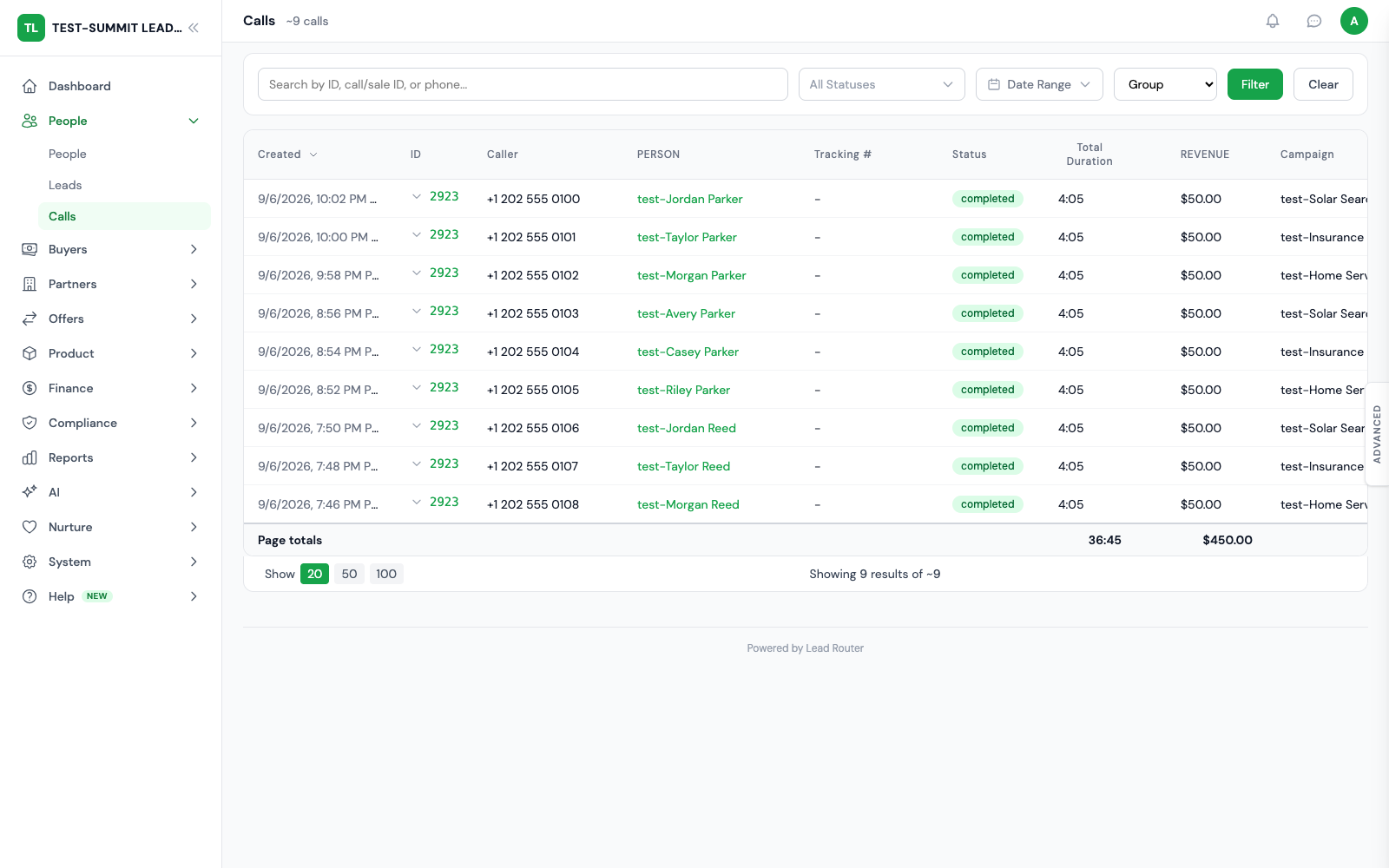
Call Tracking Software
The attribution side of calls: dynamic number insertion, tracking-number pools, IVR, recording, real-time bidding and ping-tree routing, and pay-per-call billing.
Sample workspace
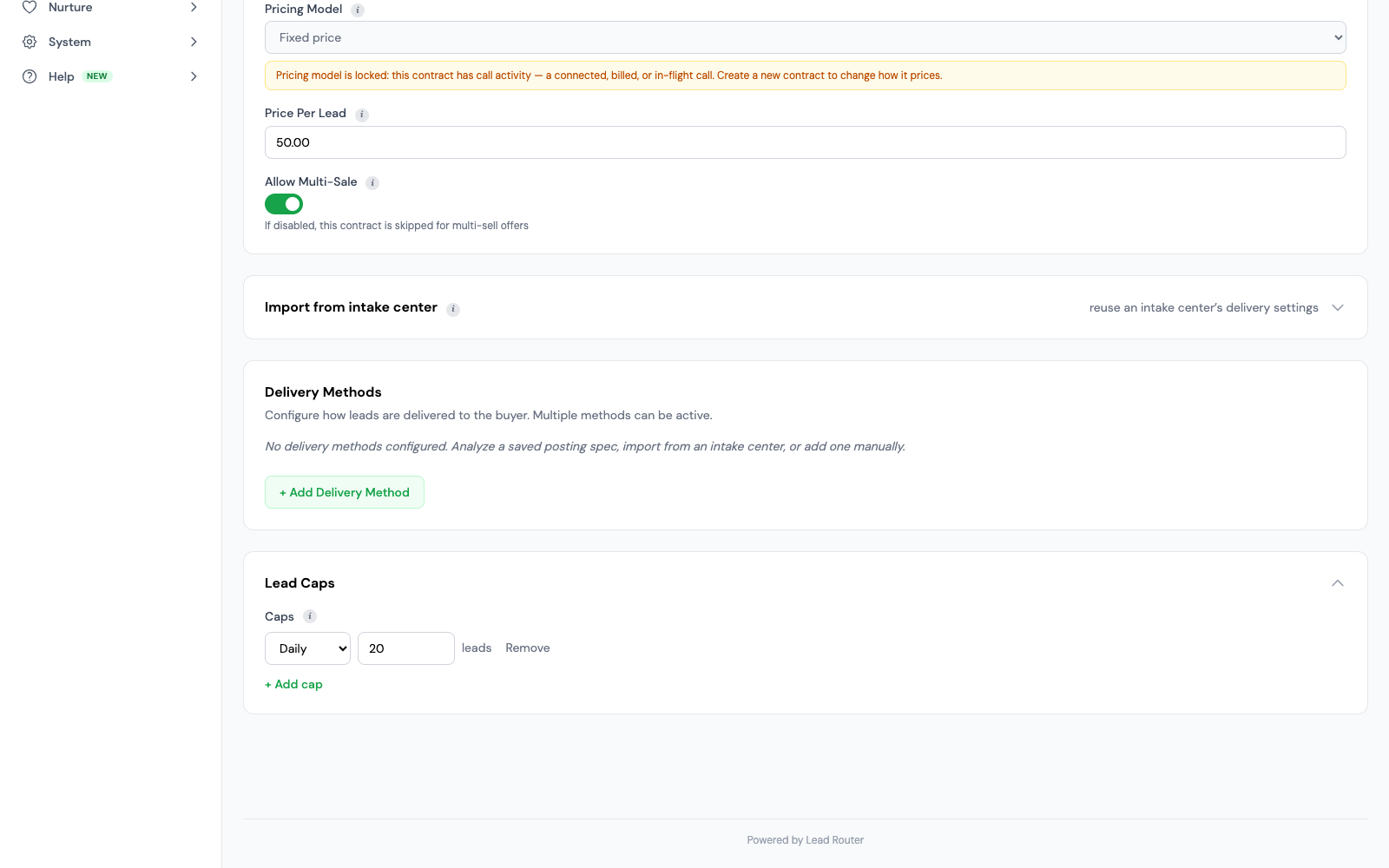
Call Routing Software
Where an inbound call goes: priority, weight, geography, time-of-day windows, caps, and fallback. The same rules route a form lead.
Go Deeper
Beyond the platform pages
The mechanics live on the feature pages; the business shapes live on the use-case and industry pages.
Features
Ping-post, waterfall, dedup, caps, the API, AI, messaging, and reporting in detail.
Use Cases
Lead generators, affiliate networks, pay-per-call networks, and call centers.
Solutions
Insurance, mortgage, solar, legal, and healthcare routing specifics.
Comparisons
Lead Router against Ringba, Phonexa, LeadConduit, and four more platforms.
One Platform
Route forms and calls from the same contract
One buyer record, one set of filters, one cap counter, one set of reports, whether the lead arrived through a form or a phone number.
Every feature is part of the plan. Usage is billed in credits.