Built for how you sell leads
The routing engine is the same for everyone. What changes is the shape of the business around it. A lead generator needs a storefront and buyers who pay up front. An affiliate network needs partner portals, posting keys, and postbacks. A pay-per-call operator needs numbers, an IVR, and per-minute billing. Pick the one that describes your operation.

By Business Model
Four ways operators run Lead Router
Each page covers the gaps that model hits, the capabilities that close them, and the questions operators ask before moving to one platform.

Sample workspace
Lead Generators & Sellers
Stop selling wholesale to aggregators. Build a direct buyer network with a storefront, prepaid SKUs, ping-post routing, and billing on your own Stripe account.

Sample workspace
Affiliate & Partner Networks
Run a partner network on a self-serve portal: an offers marketplace, posting keys, payouts, postbacks, cross-partner dedup, and CPA conversion tracking.

Sample workspace
Pay-Per-Call Networks
Tracking numbers and DNI pools, an IVR builder, whisper and live transfer, call recording, and duration-based billing metered per minute.
Sample workspace
Call Centers & Intake Teams
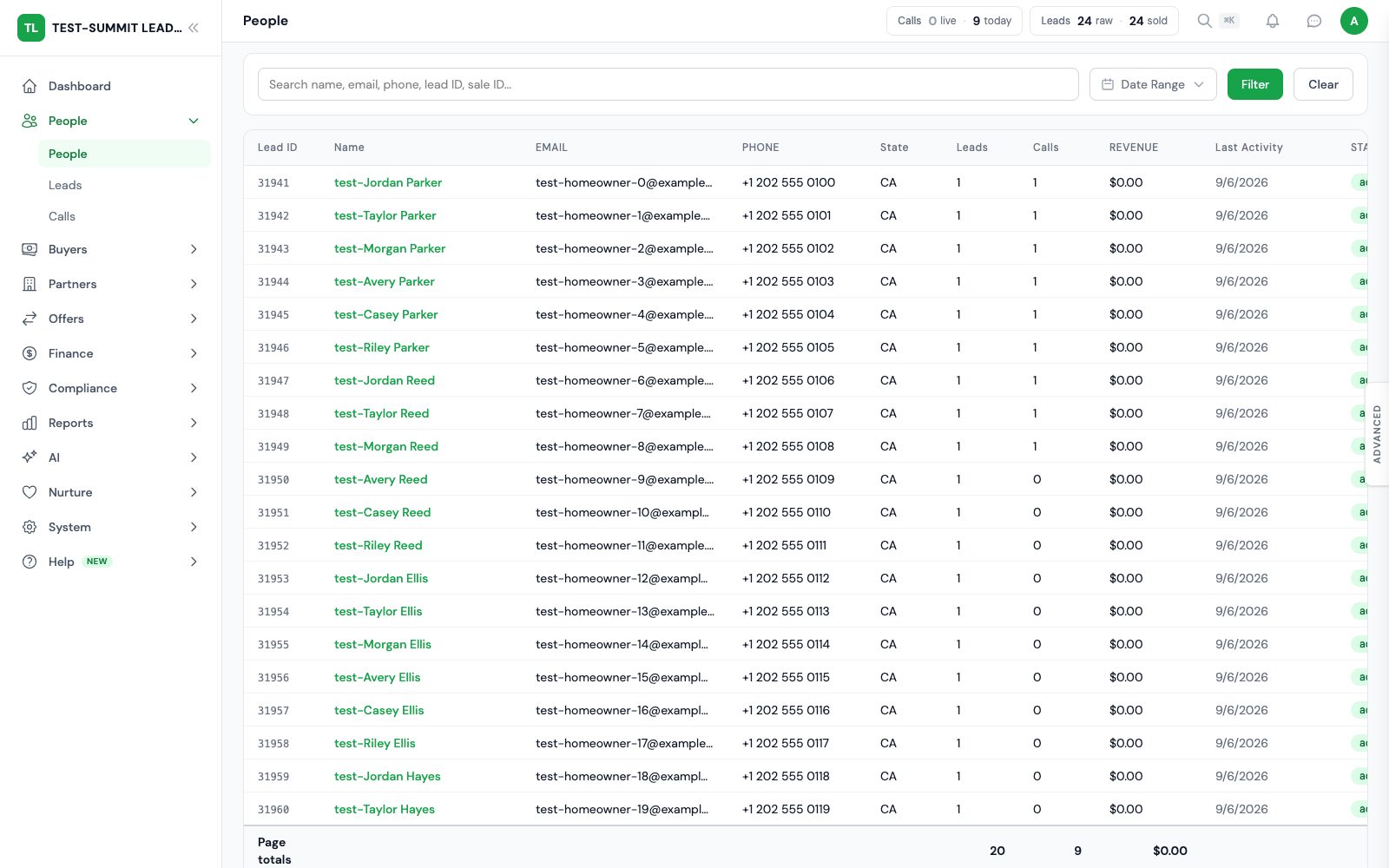
Intake centers with shared delivery and disposition mapping, disposition reports, buyer-portal call-taking, an AI dialer, lead scoring, and a People hub.
Not Sure Yet
Come at it from another angle
If your operation is defined by its vertical rather than its business model, start with the industry pages instead.
Solutions
Routing specifics for insurance, mortgage, solar, legal and mass tort, and healthcare.
Platform
Lead distribution, call tracking, and call routing on one contract engine.
Features
The mechanics: ping-post, waterfall, dedup, caps, API, AI, messaging, reporting.
Compliance
Consent capture, DNC, DSR workflow, and the audit log behind every lead.
Any Model
Run your model on one platform
Forms, calls, and messaging on a single routing engine, with buyer and partner portals included and usage-based pricing you can start self-serve.
Every feature is part of the plan. Usage is billed in credits.